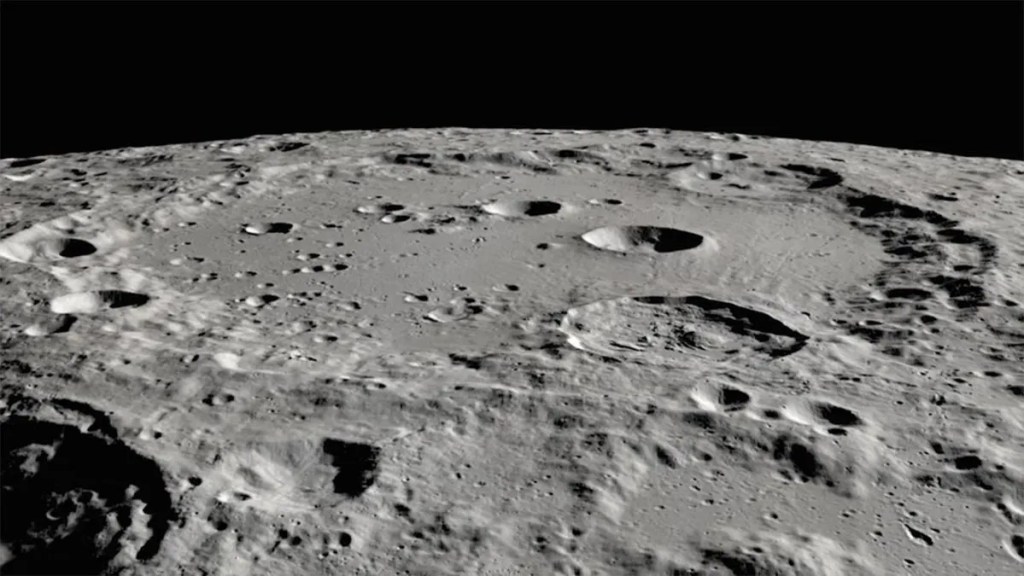
Researchers recently conducted a suborbital flight test aimed at understanding the behavior of lunar regolith, commonly known as moon dust, and its potential detrimental effects on astronauts and equipment as NASA prepares for lunar missions under the Artemis program. This experiment, called the Electrostatic Regolith Interaction Experiment (ERIE), was developed in collaboration with the University of Central Florida and focused on investigating how abrasive dust grains interact with various surfaces on the moon, including astronauts’ spacesuits and critical equipment.
ERIE was among 14 NASA-supported payloads launched aboard Blue Origin’s New Shepard rocket on December 19 from Launch Site One in West Texas. During the flight test, ERIE collected data on tribocharging, which refers to the generation of electric charges through friction, in the microgravity environment. This aspect is particularly important because the moon’s surface is highly charged due to phenomena such as solar wind and ultraviolet light from the sun. This charging phenomenon causes regolith grains to be attracted to astronauts and their equipment, creating potential hazards similar to static electricity.
The experiment involved the use of a triboelectric sensor board developed by a team at NASA’s Kennedy Space Center in Florida. This sensor board was designed to measure the positive and negative charges generated when simulated regolith particles interacted with insulators within the ERIE payload during the microgravity phase of the flight. By studying the behavior of these charges, researchers hope to gain insights into how lunar dust moves around and ultimately settles on surfaces, which can have abrasive effects and potentially block thermal radiators.
One of the major challenges highlighted by the researchers is the lack of effective solutions for mitigating the dust charging problem on the moon. Unlike on Earth, where objects can be electrically grounded to dissipate static charges, there is no similar mechanism on the lunar surface. This presents significant challenges for maintaining the functionality of equipment and ensuring the safety of astronauts during lunar missions.
The data collected from the ERIE experiment will be crucial for informing the development of technologies aimed at addressing these challenges. For example, the findings could lead to the implementation of triboelectric sensors on rovers’ wheels, allowing astronauts to measure the charges between the vehicle and the lunar surface. Ultimately, the goal is to develop innovative solutions that will help prevent lunar dust from adhering to and damaging astronaut suits, equipment, and electronics during future missions.
The successful completion of this flight test, supported by NASA’s Flight Opportunities program, marks an important milestone in advancing our understanding of lunar regolith and addressing the challenges associated with lunar exploration. By rapidly demonstrating space technologies with industry flight providers like Blue Origin, NASA is paving the way for safer and more effective lunar missions under the Artemis program.
Source:
[1] https://phys.org/news/2024-02-nasa-highly-moon.html
[2] (Cover Image) https://science.nasa.gov/solar-system/moon/theres-water-on-the-moon/
 Science News
Leave a comment