Article originally written by Lauren Slovin ’25.
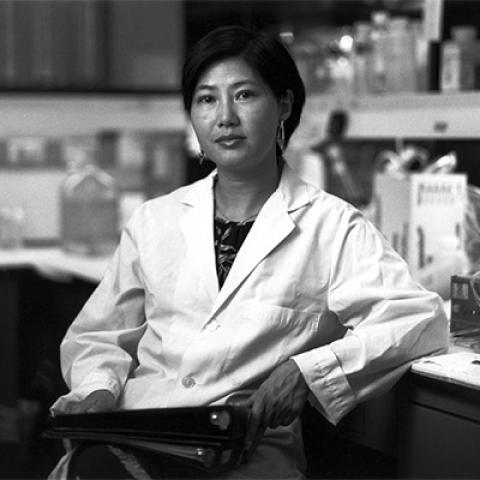
May 23, 2024—The scientific community honors the legacy of Dr. Flossie Wong-Staal, a trailblazing Chinese-American molecular biologist and virologist whose seminal contributions to HIV and cancer research have had a profound and lasting impact on medicine and public health. Born in China in 1946, Dr. Wong-Staal’s career is marked by groundbreaking discoveries that have reshaped our understanding of human retroviruses and their role in disease.
Dr. Wong-Staal first gained prominence during her tenure in Dr. Robert Gallo’s lab at the National Cancer Institute (NCI). Among her notable achievements, she provided definitive molecular evidence that the human T-lymphotropic virus (HTLV) can cause cancer. This pivotal research established that human retroviruses can be carcinogenic, a concept that had been met with skepticism by the scientific community.
Her expertise and innovative approach quickly earned her a senior scientist position, and in 1982, she was appointed section chief of the NCI Laboratory of Tumor Cell Biology. This was a period of intense research and discovery, particularly with the emergence of a new retrovirus in the early 1980s—HIV, the causative agent of Acquired Immunodeficiency Syndrome (AIDS).
Dr. Wong-Staal was uniquely positioned to make significant strides in understanding this new threat. She became the first scientist to clone HIV and decipher the function of its genes. This monumental achievement was instrumental in proving that HIV is the cause of AIDS, providing a foundation for the development of diagnostic tests and therapeutic strategies that have saved millions of lives worldwide.
Her research also revealed the high genetic variability of HIV within the patient population, a discovery that underscored the necessity of combination therapy (commonly known as cocktail therapy) in effectively managing AIDS. This insight has been crucial in the fight against the virus, highlighting the need for a multifaceted approach to treatment to address the virus’s rapid mutation rate and diversity.
Dr. Wong-Staal’s work extended beyond the laboratory. She was a mentor and leader who inspired a generation of scientists to pursue research in virology and molecular biology. Her legacy is enshrined not only in her scientific contributions but also in the many lives improved and saved through her pioneering efforts.
As we reflect on Dr. Wong-Staal’s extraordinary career, her story serves as a powerful reminder of the impact that dedicated scientific inquiry can have on global health. Her work continues to influence the fields of virology, oncology, and infectious diseases, ensuring that her contributions will be felt for generations to come.
Sources:
Flossie Wong-Staal
https://www.womenofthehall.org/inductee/flossie-wongstaal/
In Memoriam: Flossie Wong-Staal, Ph.D.
https://ccr.cancer.gov/news/article/in-memoriam-flossie-wong-staal-phd
 Science News
Leave a comment