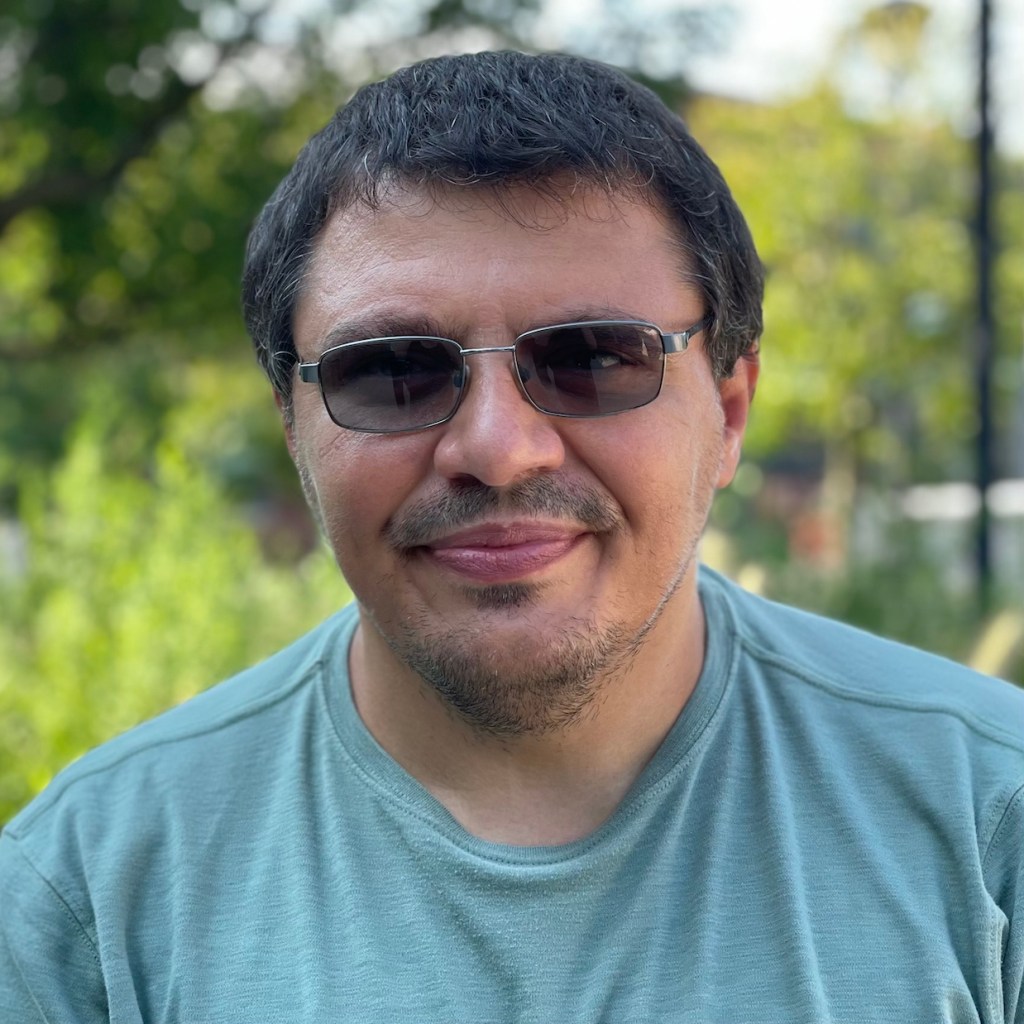
This interview was conducted by Jaymin Ding ‘25 and Aarush Dey ‘27.
I recently had the chance to interview Dr. Bove and learn more about his background and journey in physics. I hope that others reading this will also be inspired by his story.
What made you interested in science?
Documentaries. When I was a kid, and by kid, I mean less than 10, the thing that I used to watch the most on TV were documentaries about nature and a lot of that. I could spend hours glued, literally glued to the TV to watch BBC documentaries or Italian documentaries. The speakers of the documentaries were mesmerizing to me. That’s how I got into science. I didn’t know what science was; it was just something that was very interesting to me. Then as I grew up, I got to understand better what it meant and how it worked. And even when I did not know, I was curious, and I kept on reading as much as I could. Keep in mind that this was not a time when the internet was available. So reading meant you had to go somewhere, find things to read, actually read them, and then return them.
And the village where I grew up didn’t have a library, so I went to school. I could only read during school; I couldn’t take the books out. So whatever came out at school, that’s what I liked.
That’s really cool. Do you have any advice for high school students who feel like chemistry or physics, for example, is difficult or they have trouble with it?
Stick to it. Don’t give up. Nothing is easy. If you are really interested, it’s easier to stick to it. I understand that it’s harder when you know that the passion is not there. So for those kids, I would recommend exploring more. Try it out in many different contexts because there might still be an interest at heart. It doesn’t need to be full-blown “scientist mode.” It can be a passion for understanding that you didn’t realize you had or that was repressed because you didn’t like the way you were interacting with your teacher. And I’m not blaming anyone; it’s just life. You interact with human beings—sometimes it goes well, sometimes it doesn’t. So, I would say just don’t give up. Stick to it.
So now that we know what got you into science when you were a kid, could you elaborate on what got you into physics in particular?
Yeah, I can tell you. I have very vivid memories of when I figured out that physics was what I wanted to do. It was in middle school. I think I was in seventh or eighth grade, something like that. We were studying a little bit of physical science, and suddenly there was this section about atoms in the science book we had. I could not put the book down. I just wanted to know more and more. It was so cool—it made so much sense. I didn’t know it was physics yet; I didn’t even know it was chemistry. At the time, those words didn’t even appear in the textbook, or maybe they did, but I overlooked them. But for me, those were the things I really wanted to know. And I knew I was good at math—very good at math—so I wanted to do something that involved both. Eventually, physics was the thing that provided me with that.
Just to elaborate more on physics and maybe the actual in-person experience of teaching—do you have a favorite lab experiment or maybe some experiments you think are pretty cool?
Hundreds. Do you mean something related to the teaching I’m doing right now or just in general?
Maybe just in general. It could be any lecture you’ve ever done or anything like that—it doesn’t have to be current.
I think the best thing I have ever seen in an experimental context, and the one I enjoyed the most, is the polarization of light. You know, you have sunglasses called polarized sunglasses. Sorry, this is a Young’s double slit problem. In the past, no, no, no—that wasn’t part of Young’s double slit problem at the time. So polarization is pretty much—it’s an electromagnetic wave. And understanding how polarization works involves these things called polarizing glasses. If you hold them one way, light goes through like nothing has happened. But if you change the orientation—and orientation means you literally turn the lens around—you can filter out a large amount of light. So yeah, that’s one of the experiments where the first time I encountered it, I was like, “Whoa, how does this work?” Then finding the explanation, forming hypotheses, and trying to figure things out—that’s one of the most interesting things to do.
That’s amazing. So could you describe your path since you discovered you were interested in physics as a middle schooler, to where you are now, teaching physics?
I like to describe it as random work with some directionality. Random work is a process that’s completely random—you just don’t know where you’ll end up. There’s a lot of probability in life. When you do things, you don’t quite know how it will end up, and that’s where probability comes into play. But you do settle on a general direction, saying, “Okay, I want to try going there.” That’s literally how I got to where I am.
I did some tutoring of my friends at school. I would help them with math and science. That allowed me to make friends and, at the same time, to practice things that mattered most to me and understand them better. So yeah, I knew I wanted to continue on that path. That path has involved a lot of sideways, backward, and forward motion. I landed on the teaching path because I remembered that when I was teaching my friends and later on in college, I actually enjoyed it. It’s challenging. It’s a never-ending problem in the sense that even though you teach the same material, what changes is the “prime matter,” which is the students. Teaching Jaymin isn’t the same as teaching someone else, and there will never be another Jaymin. The challenge is figuring out how to make the new Jaymin understand what I’m talking about and, hopefully, to be passionate about it. Because ultimately, the aspiration of a teacher is to convince some students that what you are teaching is worth studying for the rest of their lives. That’s the idea.
Yeah, that’s really inspirational. So would you say that’s your favorite part of teaching?
Yes, it is. Helping students develop what they want to do and have a clear understanding of what they want—not necessarily how to do it, but what they want to do—is one of the greatest challenges. It’s one thing to be in a lab and try to understand nature, which has a set of rules that are defined but unknown to you. You have to figure out how to solve the riddle. But it’s another thing to try to understand a human being—what they can do, how they can do it, and supporting them as they figure out what they want to do in life. It’s a very different set of problems. It requires not just knowledge of the subject but also a human touch. That, to me, is very important.
You have a PhD—how would you describe the process of going from undergrad to getting a PhD in physics?
Well, you have to want it. You have to want to become a scientist, and in order to do that, you have to know what it takes to be a scientist. You really only learn that in grad school, not in undergrad. In undergrad, yeah, you can do some research and get a feel for it. Some undergrads are so capable that they can do amazing things and even publish before they get to grad school, which is incredible. That shows they have the potential to be a scientist. But you still have to go through grad school, because that’s where you train yourself to think in a certain way. To be a scientist, you need to develop that way of thinking. It’s not the only way, but it’s 80% the same for most scientists. The other 20% is up to you—to give your own contribution.
Editor’s Notes:
(1) On behalf of myself and the other writers and editors, we thank Dr. Bove for this amazing interview!!
(2) Dr. Bove is currently a physics teacher and YPT coach at Rye Country Day School.
(3) The text in bold was said by the interviewer (Jaymin Ding or Aarush Dey), and the regular text was said by the interviewee (Dr. Bove).
 Science News
Leave a comment