Article originally written by Tia Agarwal ’26.
South Korea’s successful and rapid transition into hydrogen energy is due to their large scale investments and target for this century. The country is a leader in harnessing hydrogen energy ever since the establishment of The Hydrogen Energy Network (HyNet) in 2019. That same year South Korea adopted the Hydrogen Economy Road map, planning to create a large hydrogen industry to increase its industrial competitiveness and create a new source of revenue. Their targets for 2040 include increasing the annual consumption market from 130,000 tons to 5.26 million and increasing SK’s Fuel Cell Electric Vehicles (FCEV), which is powered by the fuel cell powered by hydrogen, to 3 million domestically manufactured vehicles. By 2020, there will be 10,000 FCEVs on the road, the highest in the world, and double the number from 2019. Following the roadmap, South Korea’s National Assembly passed the “Hydrogen Law”, which allows the government to provide hydrogen technology companies incentives such as tax exemptions, loans, and subsidies. The government planned to spend $701.9 million dollars on hydrogen technology in FY2021, additionally committing $2.34 billion to create a private hydrogen vehicle industry by 2022. They were successful, more than half of all FCEV’s in the world were being produced in South Korea. As South Korean conglomerate Hyundai took the spot as the world’s top FCEV producer, holding 60% of the market share.
So why hydrogen? As of 2024, South Korea is Asia’s fourth largest economy, manufacturing its main source of revenue. According to the 2022 report of the European Union’s EDGAR (Emissions Database for Global Atmospheric Research), South Korea ranked as the ninth highest greenhouse gas emitter in the world. Its climate crisis has been highlighted by disastrous flooding caused by heavy rainfall in the last 3 years. While the country has companies such as Samsung SDI and LD Energy Solutions as the biggest players in the Energy Storage System (ESS) industry, it’s hard to incorporate their technology into South Korean renewable energy plants. Researchers attribute this to the country’s inhospitable terrain and exposure to natural disasters. Traditional renewable energy sources are too expensive to maintain with South Korea’s strict ESS’s laws protecting plants from fire or natural disasters. Hydrogen power solves these problems by reducing a need for constant generation (no need to depend on power sources such as wind, sun), and lasting with a refuelable, battery type power source. Following their hydrogen implementation strategy, the country used three ‘pilot cities’ Ulsan, Ansan and Wanju to test hydrogen’s scope of application. By integrating the plan into some of their major commercial cities, South Korea aims to integrate hydrogen infrastructure quickly. True to that, as CSIS finds, the city of Ulsan is seeking to produce hydrogen from petrochemical complexes that will fuel FCEVs and buildings.
However, there are some downsides to South Korea’s hydrogen over-reliance. Since hydrogen doesn’t exist alone in this world, it needs to be extracted via separation methods such as electrolysis from water or separation from carbon fossil fuels. The energy [and money] required to extract hydrogen is often greater than the energy produced. Therefore relying on hydrogen as a power-source may not be efficient for the country. Creating hydrogen fuel cells require expensive materials such as platinum and iridium, which are found in small quantities on the planet, but are essential as catalysts to run the fuel cells. The final challenge, which has also been a concern for other renewable energy sources, is infrastructure. Right now, there isn’t much to support hydrogen refueling and storage. For South Korea to implement FCEV regulations, they must invest into infrastructure that would support recharging and storage of fuel cells. Not only is it a huge initial investment, it is also not certain how viable hydrogen energy will be in the future. To conclude, as South Korea looks towards hydrogen energy as a potential solution for its energy crisis, it must build on infrastructure challenges and manage costs to see if the investment produces a desirable return.
Sources:
South Korea’s Hydrogen Industrial Strategy
https://www.csis.org/analysis/south-koreas-hydrogen-industrial-strategy
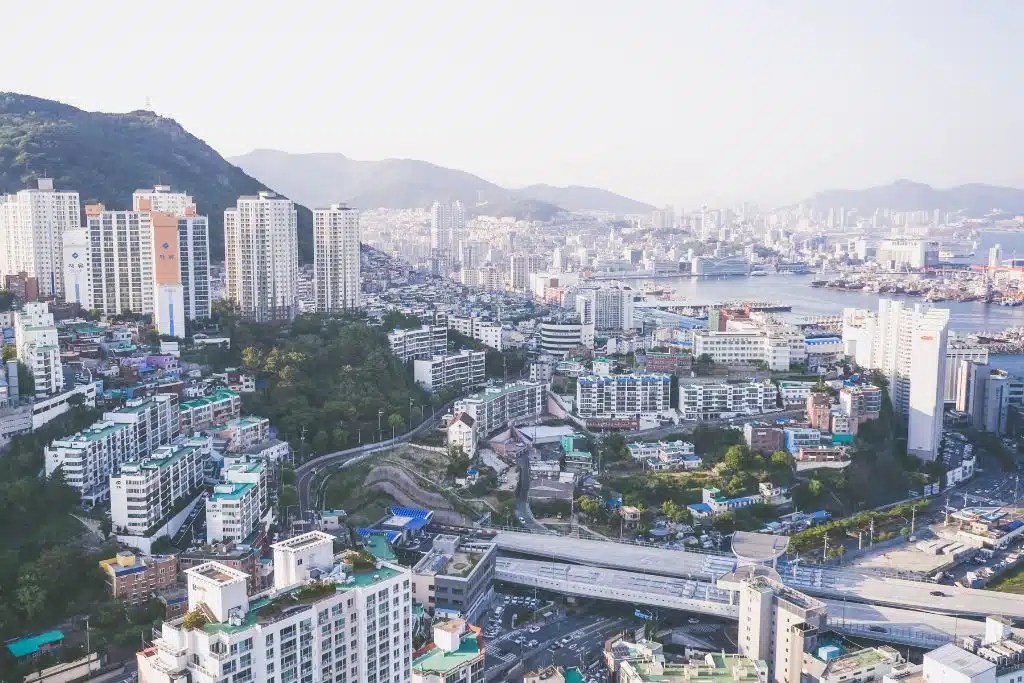
How Climate Change Is Unfolding in South Korea (Cover Image)
https://earth.org/how-climate-change-is-unfolding-in-south-korea/
What are the Pros and Cons of Hydrogen Fuel Cells?
https://www.twi-global.com/technical-knowledge/faqs/what-are-the-pros-and-cons-of-hydrogen-fuel-cells
Hydrogen’s resurgence: fuelling the future of South Korea
https://www.intralinkgroup.com/en-GB/Latest/Intralink-Insights/March-2024/Hydrogens-resurgence-Fuelling-the-future-of-South
 Science News
Leave a comment