Article originally written by Daphne Panie ’27.
A study published in the journal Science Advances on February 12th disclosed that bacterial cellulose can regenerate plant tissues.
Plants constantly face environmental stress, such as weather, human interactions, or parasites. This causes them to sustain many wounds over their lifetimes. However, the healing process in non-stem cell regions is slow and inefficient. This causes the wounds to not always completely heal and may lead to a decrease in fruit/flower production. This long healing process occurs through callus formation, triggered by the activity of multiple hormones such as auxin and cytokinin.
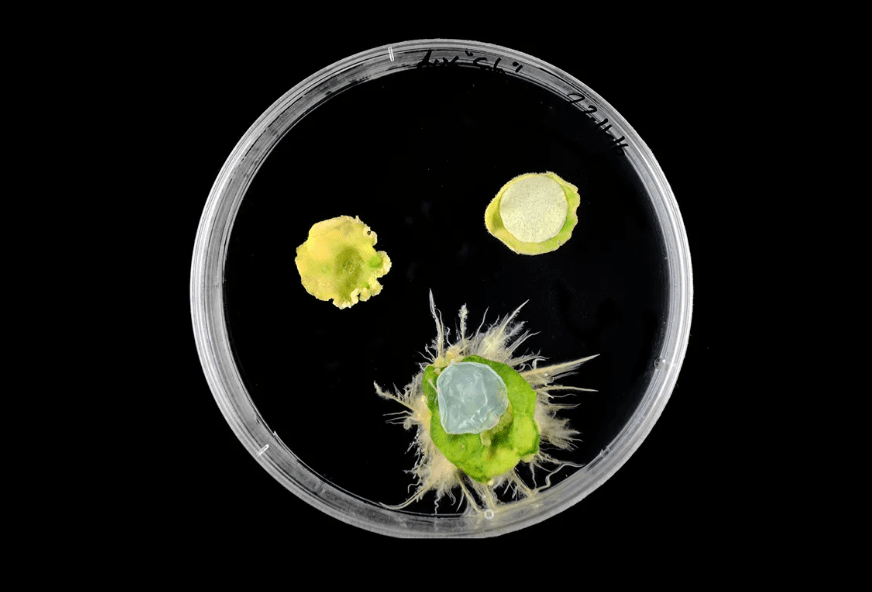
This study examined the ability of bacterial cellulose (especially from the bacteria Komagataeibacter xylinus) to heal wounds in plants. Through this experiment, scientists aimed to find a more energy-efficient way of healing wounds in plants. Scientists made razor-blade cuts on plants’ leaves and applied bacterial cellulose over the wounds. They then monitored the healing and found out that after 7 days, 80% of the wounds were completely healed while the other 20% were in the healing process. The tissues were functional and able to perform photosynthesis as they contained chloroplasts. They also noticed that bacterial cellulose also enhanced vegetative propagation (a technique to grow genetically identical new plants using cuttings).
It was ultimately discovered that bacterial cellulose would trigger the hormone cytokinin in a unique way. Cytokinin will send signals to healthy cells, asking them to proliferate and multiply in order to heal the wound. In parallel, it also activates regulation genes and defense-related genes which regulate homeostasis in reactive oxygen species (highly reactive molecules that contain oxygen which are often byproducts of cellular respiration and photosynthesis). By increasing the production of superoxide anions (O2–), these genes promote cell proliferation and the wound-healing process.
Prior to that, the public was already aware of the beneficial aspects of bacterial cellulose, which, due to its biocompatibility and biodegradability, was used to treat wounds in humans.
When further analyzing bacterial cellulose, scientists discovered that it contained plants’ hormones which could explain its nearly miraculous effects on wound healing. Indeed, bacteria have often had a mutualistic relationship with plants over the past thousands of years leading to bacteria developing hormones that could benefit plants.
This groundbreaking technology challenges traditional ideas about plant healing processes and introduces a faster and more efficient way of healing wounds. As bacterial cellulose is an environmentally friendly, non-toxic, healing material, it has become an excellent alternative to nowadays treatments that can damage entire communities and ecosystems if toxic to one species. Farmers could use this technology on their crops to protect from infections or repair wounds after any natural disasters.
In addition, with climate change and global warming, this could be an excellent alternative, helping plants regenerate faster after droughts or storms which are expected to increase over the next decades.
Finally, this discovery shows parallels between regeneration in humans and plants, further bridging the gap between these two types of cells. This leaves scientists wondering if other chemicals or organic molecules are capable of functioning both in plant cells and animal cells. With additional research being done, bacterial cellulose could open a field of possibilities in medical research.
Sources
 Science News
Leave a comment