Article Originally Written by Annabella Yu ’26
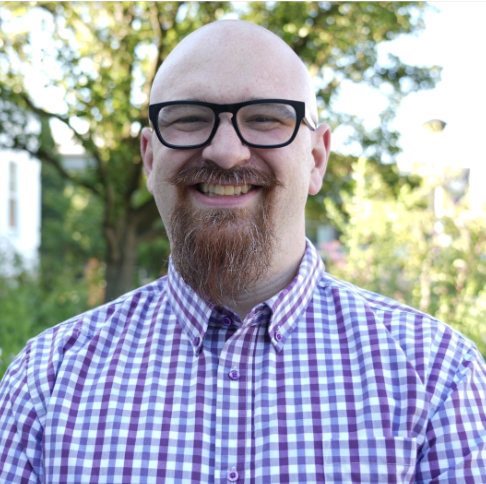
What drew you to chemistry, and why do you love teaching it?
I knew in freshman year of high school, maybe eighth grade, I wanted to be a teacher. I liked the idea of being able to help. I was inspired by my own eighth grade teacher. His name is Dr. Maripoti. I wasn’t sure what I wanted to teach, though. Initially, I wanted to teach math or history. I really liked both, and I really liked the idea of making connections to things. It wasn’t until I took my chemistry class in high school. Actually, my biology class freshman year was taught by a chemistry teacher. There was a chemistry focus in the way that she taught some of the biology stuff. I thought this was really interesting. Then I took chemistry, and I was like, “this is really cool.” Once, I was seated in the middle of a clump of my classmates, and I kind of got in trouble with my teacher because I was helping them. My classmates were like, how did you do that, can you explain? I would be explaining proportions and ratios. Eventually, she realized after a couple of tests that I knew what I was doing and I was just helping everyone, and that was when I knew I wanted to be a teacher, and I wanted to teach chemistry. To this day, if I see students talking with their neighbors, I ask, are you being productive, because I never want to assume people are being intentionally distracting, they might be helping each other.
If you could simplify one complex chemistry concept, which would it be?
In Chemistry 1, I really latch onto understanding orbital diagrams and how electrons behave around atoms. Understanding how they move, how they behave, and the orbital model and quantum mechanics, that is how those electrons behave. If you approach it that way, it makes understanding structures more relevant, and chemistry is about things bumping into each other; if they’re structured a particular way, that informs how they react. In Chemistry 2, it’s Gibbs free energy and equilibrium, especially equilibrium. In my curriculum, our second and third units are on those two concepts, how much energy we can free up in the universe, and what equilibrium means and its dynamic nature. Reactions don’t stop; forward and reverse reactions are sometimes reacting at the same rate. Even with solubility and precipitates, the precipitate is constantly being dissolved and reforming; it’s just that one is faster than the other.
How do you connect chemistry and love for theater?
I was a double major in chemistry and theater. In high school, I did theater to have something to do. I signed up for stage crew, and it became a second family. I was drawn to the structure parts of it. Before I wanted to be a teacher, I thought about being an architect, so participating in technical theater let me do scenic designs. When I got to graduation, I couldn’t choose, so I didn’t. I double majored. The connection is that the roles I took on in theater, stage management, leading a team, having a goal, managing time, coordinating complexities, listening, translate into being a teacher. That prepared me for being science department chair; I leverage a lot of that experience from being a stage manager.
How do you encourage curiosity and experimentation, and what’s your vision for the science department?
I want a science department that embraces research and presenting research. I would love to see every science course end the year with a big research or experimentation project and a science fair to showcase it, especially seniors. I imagine seniors here presenting to the community and sharing their legacy: what they did and how their research will benefit the community. Because we are K–12, how cool would it be for a first or second grader to hear a senior’s presentation and be inspired, and by the time they’re older, continue that research? Research should be the thing we do well here. If all our students can leave with five or six research presentations, they’ll be comfortable standing in front of a crowd, explaining themselves, withstanding scrutiny, and feeling like an expert. I insist everyone has the opportunity.
For example, Colgate University drew me in because of strong undergraduate research; in a world where research was for graduate students, Colgate stood out. Similarly, why can’t high school students do research and make a difference? Ocean Cleanup started with a teenager. Greta Thunberg is another example. There was a student who figured out a way to have a litmus paper test for cancer. My own undergraduate research failed; it didn’t amount to much, but I presented polymer research in a place without much polymer work. Having my organic chemistry professor ask me genuine questions and realizing I was the expert in the room was special. That validation, doing it yourself, is the value of student research.
What is your favorite element or compound? Why?
My favorite compound is potassium permanganate because it is a very saturated purple color, rich and regal. It is unstable and very reactive, so once exposed to oxygen it rapidly decomposes and turns into an unsatisfying brown. Maybe it’s the theater person in me, but we need to realize things are temporary. We spend months building set pieces, they look good on stage, and then we take them apart. We appreciate things while they’re there, and because they go away, we appreciate them all the more.
If you could have dinner with any scientist, who would it be?
If it’s a living person, I would love to sit down with Neil deGrasse Tyson. I feel like we have a similar approach to science, a pure love of science. Very few scientists have his approachability and appreciation that all science is good. He’s an astrophysicist at the top of his game, but I feel like I could geek out with him about permanganate. He engages anything, connects ideas, and is uplifting. Science shouldn’t be exclusionary. He embodies how science can be for everyone. All science is valid. All research is valid. We are better by uplifting each other than by being competitive. I would ask him what recent study or paper fascinated him.
What are your hobbies or passions outside of chemistry
I’m a gamer. I really love board games. As I’ve gotten older, my reflexes aren’t as good, so I moved from real-time to strategy type games. I was an OG StarCraft player. Recently, I’ve been playing Borderlands 4. I enjoy old-school RPGs and strategy games, generally turn-based. Board games let you meet with people in person and play together. My favorite board game is New Angeles. It’s like Monopoly on steroids: every player is a CEO of a megacorporation in a cyberpunk universe trying to keep a privately run city from failing while making as much money as possible. It’s against my values when I play, I am a jerk, but it’s so much fun. The board game Terraforming Mars is the one I played most. My wife and I have played easily for a couple hundred hours. You raise temperature, increase atmospheric oxygen, and add oceans; once those are met, you’ve terraformed Mars, and whoever contributes most wins. It’s semi-competitive and strategic.
How do you handle setbacks or failed experiments, and what can students learn?
Setbacks should always be approached with, what did we learn from this? Sometimes we learn more from failure, because through failure we learn what did not work. Failure is normal and fine in the lab. Reflecting and bouncing back is what really matters: what do I learn, and how do I move on for the next attempt? It’s not about failure; it’s about what you’re going to do next time. Flip it around too: what do you learn from success? When things go perfectly, we still need to ask why, because success could be a fluke. When I was a squash coach, after matches and in practice, I would ask what went well, because we need to learn from our successes, not only our failures.
What “life skill” can learning chemistry develop?
In high school, your job is to find two things. One, what are you good at: your skills, where you’re successful. Two, what brings you joy: what you enjoy doing. If you’re looking for a career path, stick with what you’re good at. Most times if you’re good at something, you tend to like it. Sometimes the things that bring us joy are not a career but a hobby. I love video games, but I can’t make a career out of it. I can make a career out of being a good educator to fund my love of video games.
Common misconceptions about chemistry
Chemistry is hard. That doesn’t mean you’re dumb. Science is difficult and challenging. If you find it challenging, you’re more normal than not. Challenge is okay. Sometimes doing those hard things and being good at them brings joy and satisfaction. Accept that it’s hard, and accept that you either put the work in or not. There’s nothing wrong with you for finding something difficult. If it’s easy for you, that’s good too. Figure out what you’re good at.
 Science News
Leave a comment