Article Originally Written by Louis Panié ’27
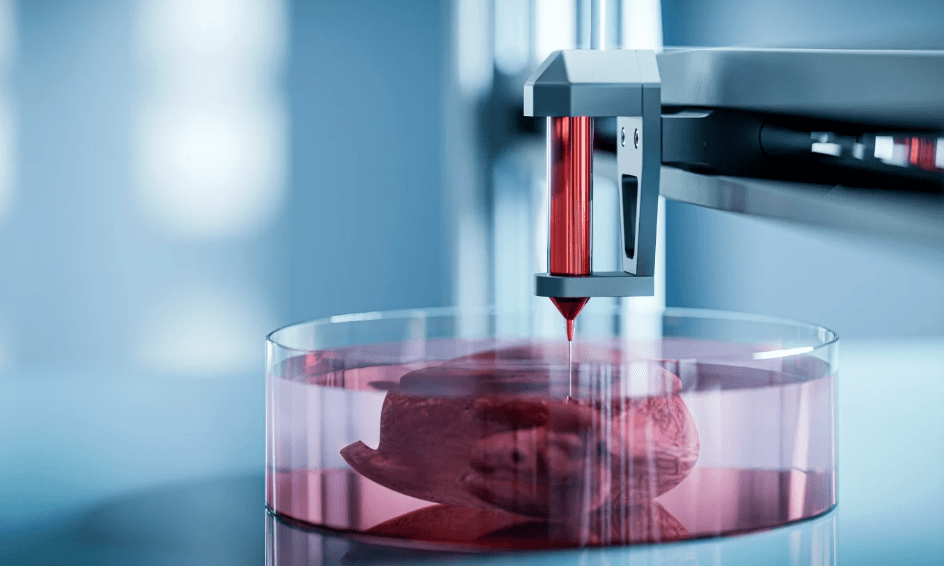
Every 8 minutes someone is added to the organ transplant waiting list. Over 100,000 patients are on this list, hoping and waiting for organ transplants that may never come. The global shortage of organ donors is a huge challenge in modern medicine. To face this major problem, scientists are turning to new and futuristic solutions, combining biology and engineering to provide for those in need of organs. Recent breakthroughs, in the University of Hong Kong, have explored two futuristic technologies, organoids and 3D bioprinting, and research how they could eliminate the need for organ donors.
Organoids are miniature and simplified versions of organs grown from stem cells in laboratories. They only require a simple oral swab to start growth which makes it even more accessible and easy to put in place. They can mimic functions of complex organs like the kidney, liver, or brain, making them very useful for research. Meanwhile, 3D bioprinting is similar to normal 3D printing, except it uses “bio-ink”. Bio-ink is a complex mixture of living cells and supportive materials, often hydrogels, to print tissues. Together, these two new technologies might open the path to scientists for lab grown organ transplant.
Scientists are investigating a combination of these two technologies to remediate the growing organ transplant crisis. This complicated process begins by growing organoids from stem cells, collected from simple oral swabs. Stem cells are often refered as the building blocks of human organs. Then, by using a 3D bioprinter, researchers put those organoids in precise arrangement which, by copying the structure of full-sized organs, create organs. Unlike organoids grown in isolation, these printed organs can form large and complex tissues. This process creates organs that if perfected, would bring science and medicine one step closer to fixing this major issue and to transplant-ready organs.
If this technology gets perfected, it could change medicine as we know it forever. Instead of relying and hoping for rare organ donors, doctors could make tissues engineered with a patient’s own cells. This would also significantly reduce the risk of rejection. Custom tissue sizes could be printed to perfectly fit a patient’s size, weight and needs. This would also speed up transplants and personalize treatments for common diseases like heart diseases, which is the highest mortality cause in the US, kidney disease or liver damage.
So far, researchers have successfully printed mini livers, kidneys, and intestines in labs. Early tests on animals show promise that this technique might be the key that allows scientists to replace organ donors. However, human applications are still experimental. The major challenges include keeping the tissues alive in the long-term as well as creating blood vessels and nerves inside printed structures.
Despite the challenges, the overall potential impact could be enormous. Beyond transplants, 3D printed organoid-based tissues could revolutionize drug testing and disease research. It would completely revolutionize it by providing more accurate human-like models. Scientists believe that as technology advances, the combination of two technologies combining engineering and biology may one day bring an end to transplant waiting lists.
Sources:
- 3DPrinting.com. (2025, July 3). University of Hong Kong Scientists Explore Growing Organs with 3D Printing Technology – 3D Printing. 3D Printing. https://3dprinting.com/news/university-of-hong-kong-scientists-explore-growing-organs-with-3d-printing-technology/
- Hill, A. (2025, July 3). Hong Kong scientists 3D printing organs for transplant patients — 3D-printed respiratory tissue combined with lab-grown mini organs in new procedure. Tom’s Hardware. https://www.tomshardware.com/3d-printing/hong-kong-scientists-3d-printing-organs-for-transplant-patients-3d-printed-respiratory-tissue-combined-with-lab-grown-mini-organs-in-new-procedure
- Breakthrough in 3D-printed scaffolds offers hope for spinal cord injury recovery. (2025). College of Science and Engineering. https://cse.umn.edu/college/news/breakthrough-3d-printed-scaffolds-offers-hope-spinal-cord-injury-recovery
 Science News
Leave a comment